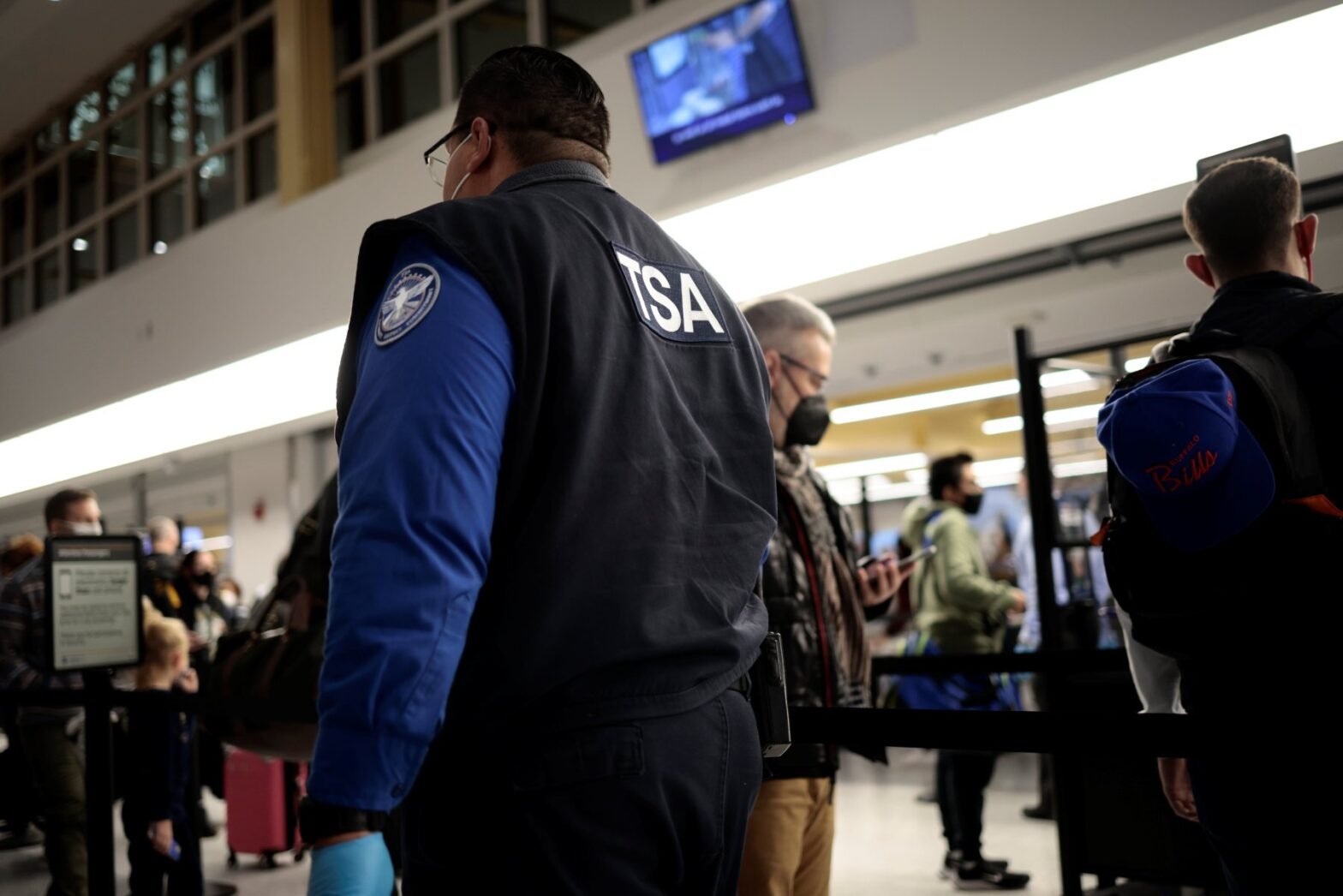
Earlier this week, the Transportation Security Administration confirmed that TSA officers at airport checkpoints will no longer be allowed to sit while reviewing traveler identification and boarding passes. In a statement, the TSA claimed that the decision supports a two-fold mission, aligning with agents’ hospitality toward passengers and workers’ agility in maintaining safety.
“TSA officers performing the travel document checker (TDC) role are the first to interact with the traveling public,” an agency spokesperson said, per Fortune. “This welcome change reinforces both our security posture and our commitment to hospitality by having these officers on their feet and alert. All officers must meet fitness for duty requirements to be capable of performing their vital national security function while simultaneously creating a welcoming and professional environment for travelers.”
TDCs To No Longer Sit – What Has The Response Been?
The union that represents TSA agents is the American Federation of Government Employees (AFGE) TSA Council 100. The union said the TSA’s decision to remove chairs used by TDCs is “on a nationwide level.” In a statement released in late September, the union commented on the standing mandate, noting realities of how checker agents may be impacted during their shifts.
“These chairs serve as basic ergonomic and safety support for officers that stand and walk on hard surfaces all day. TSA is treating this matter like it is a privilege – it is not; it is basic safety and common decency for the workforce,” the AFGE Council 100 said. “Further, this change in working conditions is likely based on TSA’s current leadership working groups at headquarters that did not involve the union. This disregard for employee rights and safety is an example of a broad pattern of TSA’s true consideration of the employees who keep our nation safe.”
What This Means For Travelers
For travelers, going through the airport’s TSA checkpoint should be business as usual. Security agents may request your identification – a passport or government-issued ID – and boarding pass, either printed out or digital. The only difference is that instead of interacting with a TSA agent sitting down while checking your travel documents, they’ll be standing. If your ID and boarding pass are cleared, you’ll move on to the next step of the security process, where they scan your carry-on items and person for potential flight risks. If they don’t find anything dangerous, you’ll be free to collect your belongings and head to your gate.
On social media and online forums, some travelers expressed concern that TDCs now have to stand their entire shift. Some said they feel the standing mandate is unnecessary. Moreover, some travelers fear the ruling will make grumpy TSA agents more irritable while on the job.
While it’s unclear how much the standing rule will affect TDCs’ morale and hospitality, travelers can do their part in making air travel as smooth, fast, and pleasant as possible for everyone involved. That means arriving prepared with the correct documents, packing appropriately, and following TSA workers’ instructions promptly and accurately.