Palazzo Reale opened two exhibitions within three days of each other at the end of September — Dalí and fashion on the 24th and a centenary retrospective of the photographer and novelist Carla Cerati on the 26th, while fashion week was still running in the streets outside. Matisse arrives at MUDEC on October 8, the same day Luciano Fabro takes over the former Breda factory sheds in Bicocca, and Francis Picabia follows at Palazzo Reale a day later.
I walk Milan for hours most weeks, and the Duomo sits on one of my regular routes, so I see the fall season arrive in the piazza before I read about it. August empties the city toward the coast and the mountains, and Milan slows down with it. By late September the openings stack up faster than anyone can keep pace with, and several are worth clearing an afternoon for.
The shows below are grouped by neighborhood, each with a nearby bookshop or bar. They start with Carla Cerati, whose photographs of Milan’s cocktail circuit in the early 1970s show a cultural scene that, according to her daughter, was far easier to walk into than the one visitors find now.
Palazzo Reale, The Galleria, And Aperitivo
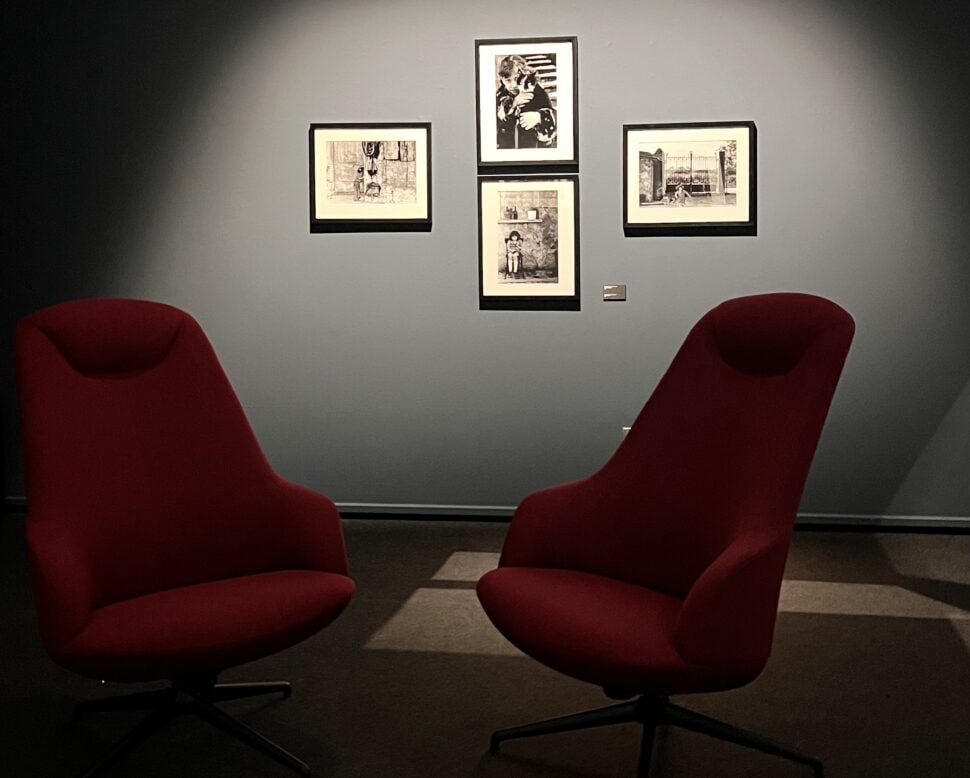
If you see one exhibition this fall, make it Carla Cerati. Plurale femminile. Fotografia e scrittura, 1926-2026 at Palazzo Reale, open until January 10, 2027. Cerati began working as a photographer in 1960 and spent two decades photographing the city’s writers and its student protests, as well as the psychiatric hospitals she documented with Gianni Berengo Gardin for Morire di classe, published by Einaudi in 1969. She published her first novel in 1973 and eventually devoted herself fully to fiction, and the show sets more than 200 photographs beside her novels and papers.
I was most drawn to the Mondo Cocktail photographs, her 1974 book of 61 photographs taken at the cocktail parties of Milan’s moneyed class. Her daughter, Elena Ceratti, co-curated the exhibition with Giovanna Calvenzi and Mariateresa Cerretelli, and when I asked how her mother’s Milan compared with the city a visitor finds today, she talked about access. “You had openings, very easy openings,” Ceratti told me. She went on to mention book presentations and inaugurations of interior decorating shops. She pointed to a recent Vogue show as an example of the kind of access now reserved for big stars.
Tickets cost €15 ($16.91), and on Thursdays Palazzo Reale stays open until 10:30 p.m. In the same building, Dalí e la Moda runs through January 31 with more than 200 works and archival materials, including paintings, drawings, photographs, garments, films, jewelry, and objects, while Picabia. Aprire le porte della notte opens on October 9. The Dalí is the louder, busier show, and the Cerati is the one you will still be talking about at dinner.
The Galleria Vittorio Emanuele II, two minutes across Piazza del Duomo, holds Libreria Bocca, a bookshop with roots going back to 1775 and a strong shelf of art titles. Upstairs in the arcade, Fondazione Prada’s Osservatorio shows Hito Steyerl’s The Island until October 30. Finish at the Camparino in Galleria, where Davide Campari opened his standing bar in 1915. It fills with tourists by 6 p.m., and a Campari Seltz at the counter is still the correct way to end the afternoon.
From Porta Venezia To The Darsena
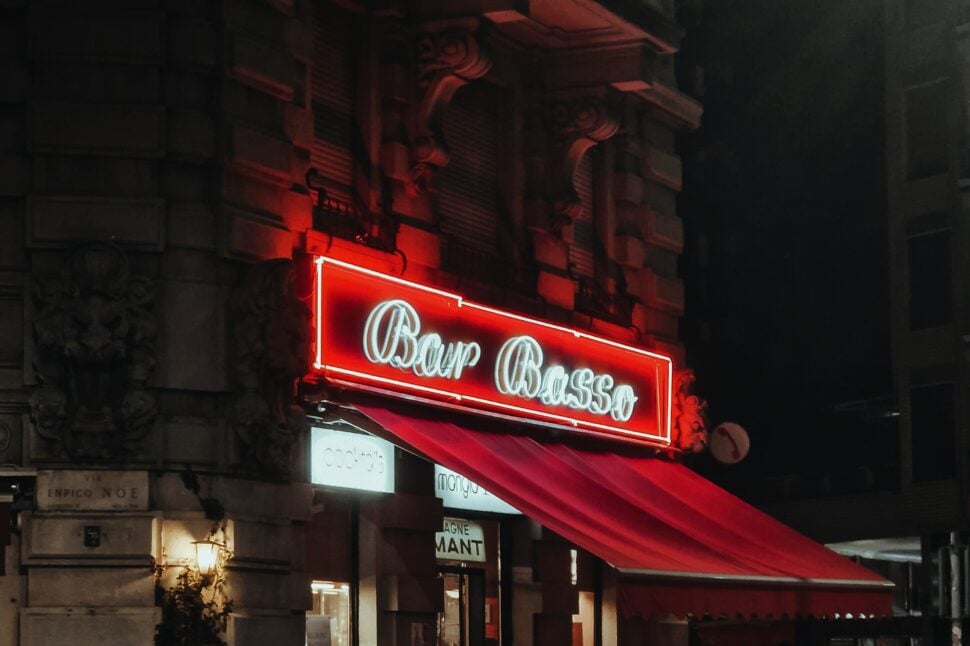
For a look at how moneyed Milan lived with its art, the Casa Museo Boschi Di Stefano on Via Jan keeps around 300 works, Morandi and Fontana among them, inside an apartment in a building Piero Portaluppi designed between 1929 and 1931. Entry is free, and it closes at 5:30 p.m., which leaves time for a short walk to Bar Basso on Via Plinio. Mirko Stocchetto, who ran the bar from 1967, is said to have invented the Negroni Sbagliato there by accident in 1972, and the bow-tied servers still pour drinks into glasses that need two hands. Ceratti described the Milan in her mother’s photographs as belonging to the years just before the era of Milano da bere, a slogan from a 1985 Ramazzotti ad, and this room sits right on that seam.
In NoLo, the American designer Edward Buchanan opened The Situation on September 25 at Via Merano 18. Buchanan developed Bottega Veneta’s first ready-to-wear collection and later founded his own label, Sansovino 6. He has turned 400 square meters into a gallery, residency, design studio, and archive for Black, queer, and women creatives, among others who rarely get the space, under the project’s own motto, “Black Owned. Black Operated. Forever.” The Situation plans at least one free event every month, and the workshops run on a sliding scale, so check the program before you go.
MUDEC’s Matisse. Il mondo in una stanza opens on October 8 in the converted Ansaldo works on Via Tortona, with around 100 pieces curated by Ellen McBreen and Chiara Gatti on how African, Islamic, Russian, Pacific, and Chinese art shaped Matisse’s language. Go for the late work, the Océanie panels, plates from Jazz, and designs for the chapel in Vence, along with photographs he took in Morocco that have never been published. A full ticket is €16 ($18.04), Thursdays run until 10:30 p.m., and the show closes February 21, 2027.
Afterward, I walk east to the Darsena and up Corso di Porta Ticinese to Verso at number 40, a two-floor bookshop opened in 2015 by a group of friends from publishing and cultural work, with a bar that moves from coffee to wine as the day goes on and keeps going into the evening.
Fondazione Prada And HangarBicocca
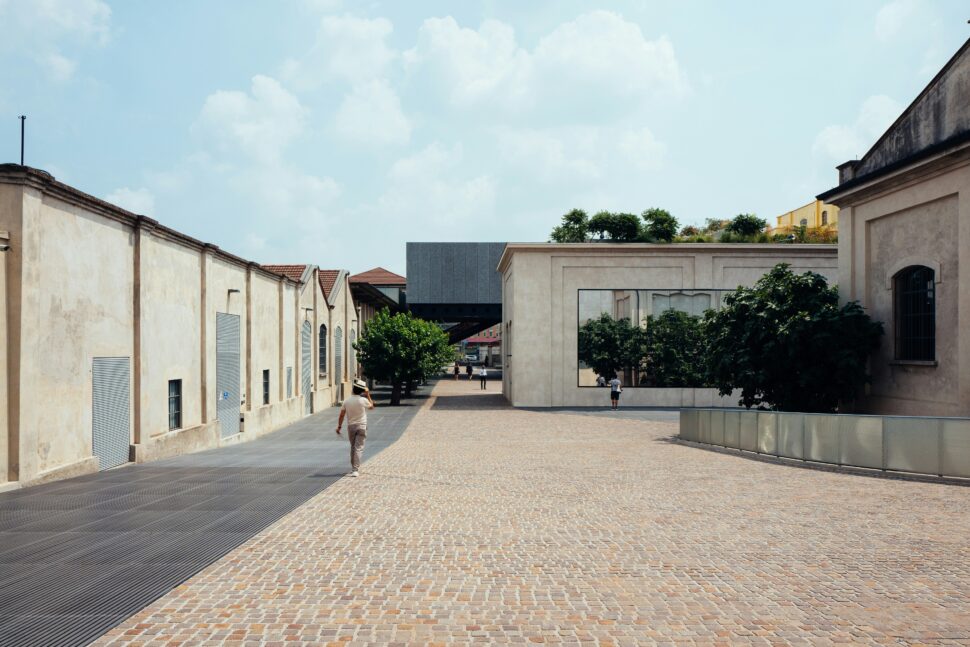
Fondazione Prada’s two fall shows overlap for five days in November, since Mona Hatoum’s Over, under and in between closes on the 9th and Global Antiquity opens in the Podium on the 5th. Hatoum’s centerpiece is Map, more than 30,000 red glass spheres laid across the floor in the shape of the continents. Global Antiquity gathers more than 150 objects tracing exchange between the Mediterranean and Asia from about 700 BCE to 1000 CE, curated by Salvatore Settis, Anna Anguissola, and Chiara Ballestrazzi in an installation by Rem Koolhaas and AMO. Take your coffee at Bar Luce, which Wes Anderson designed in 2015 with Formica furniture and a vaulted ceiling modeled on the Galleria. “I tried to make it a bar you’d like to go to five times a week,” he said.
Pirelli HangarBicocca charges nothing at the door and is the best value in Milan. From October 8, its long Navate holds Luciano Fabro. Abitare lo spazio, about 50 sculptures and installations by the Arte Povera artist. Look for Piedi (1968-71), feet cast in Murano glass and draped in silk, while Aki Sasamoto’s XYZ fills the Shed until January 17. HangarBicocca opens only from Thursday to Sunday, so build your week around a Thursday, with Fabro after lunch and Cerati at Palazzo Reale after dark.