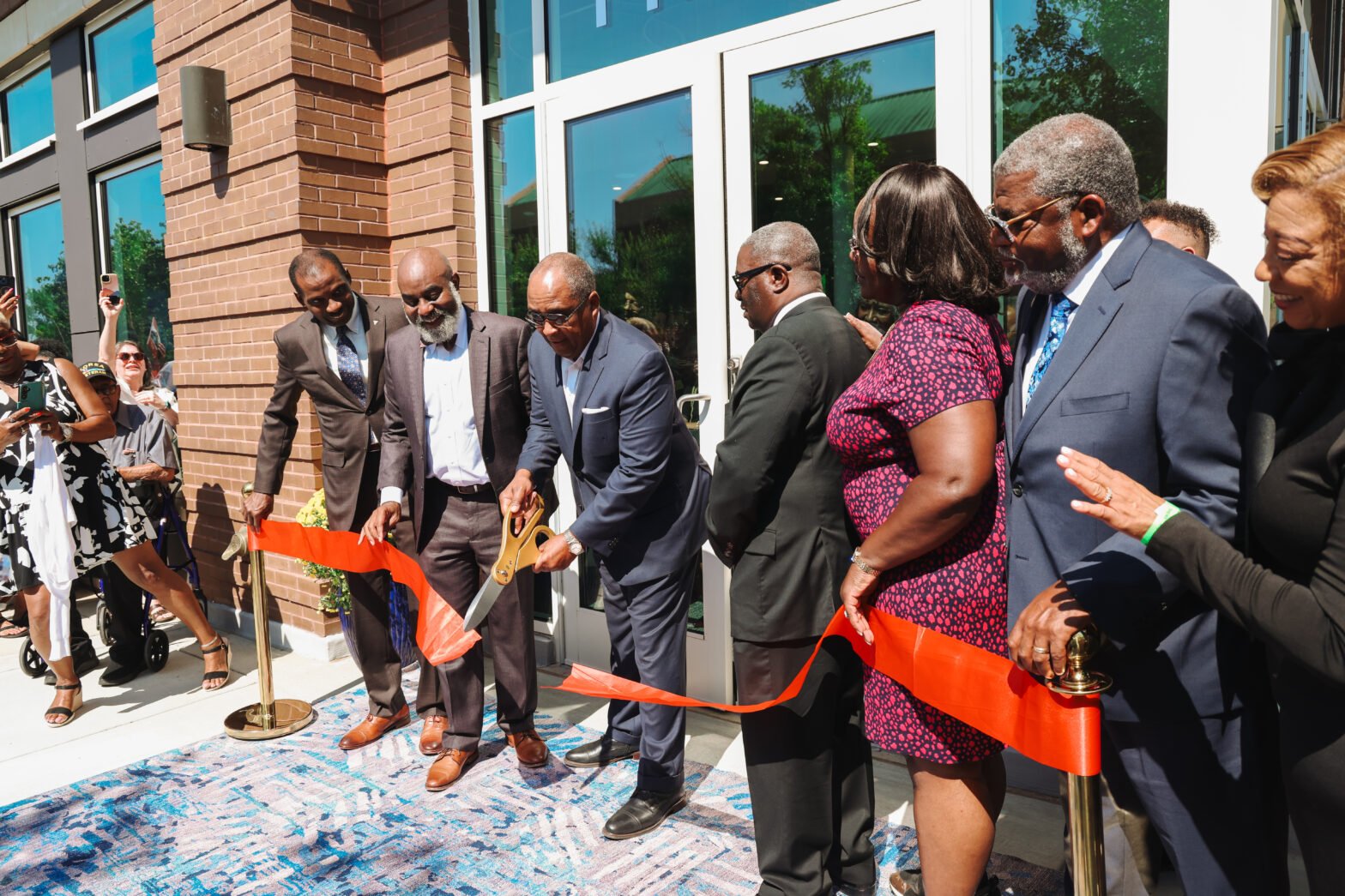
Sixty-three years to the day after Ku Klux Klan members bombed Birmingham’s 16th Street Baptist Church, killing four young girls, the historic church opened a new center designed to carry their story and legacy to a new generation.
The 16th Street Baptist Church Education & Visitor Center opened on Sept. 15, 2026, during the church’s annual memorial service for Addie Mae Collins, Denise McNair, Carole Robertson, and Cynthia Wesley, who were killed in the Sept. 15, 1963, bombing. The service also remembered Johnny Robinson and Virgil Ware, two Black boys killed in Birmingham later that same day.
“September 15 is not simply a date we remember. It is a sacred moment that calls us to remember four precious lives, reflect upon the price of hatred and injustice, and re-engage with the work of building a more just and beloved community,” the church’s current pastor, Rev. Arthur Price Jr., said in a statement. “The story of Sixteenth Street Baptist Church is not frozen in the past. It is a living story of faith, courage, sacrifice, and hope.”
Founded in 1873, the church was a gathering place for Birmingham’s Black community and a staging ground for the youth-led marches of the 1963 Children’s Crusade. The bombing became a defining moment of the civil rights movement, and the church has since become a sacred place to remember the continuing struggle for freedom. It was designated a National Historic Landmark in 2006 and has welcomed millions of visitors worldwide.
Inside The 16th Street Baptist Church Education & Visitor Center
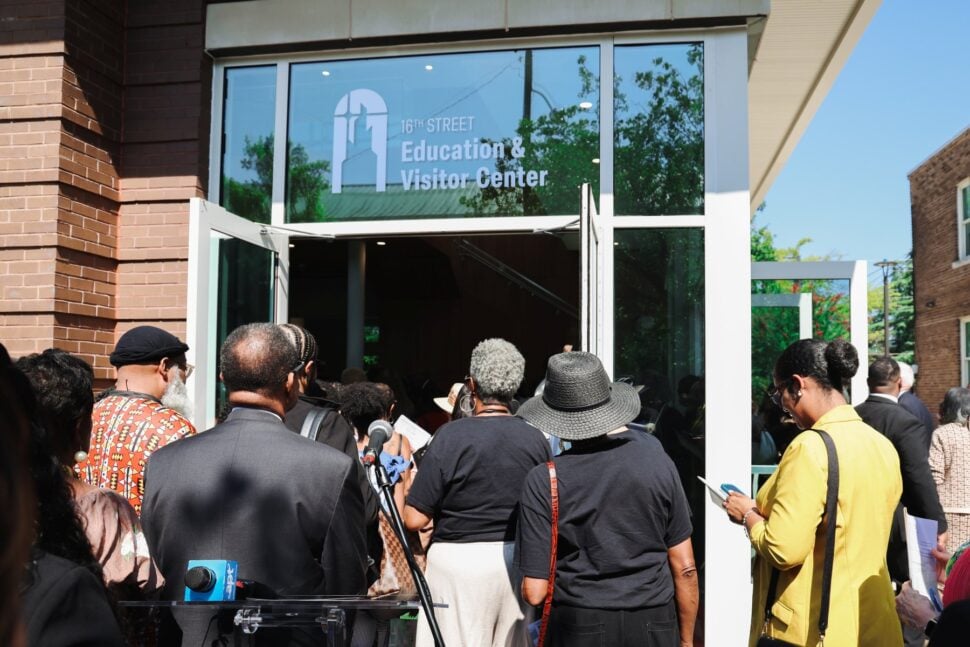
The 13,000-square-foot center sits beside the historic sanctuary. Church leaders say it was designed to foster meaningful engagement and reflection on issues that still shape communities today. Programming includes immersive exhibits, oral history initiatives, artist residencies, community quilting projects, and a public speaker series.
Among the signature exhibits is the River Wall, an immersive installation inspired by the stained-glass window that the people of Wales gave the church after the tragic bombing. The center also houses Koinonia, a local, Black-owned restaurant named from the Greek word for fellowship. Church leaders say the restaurant reflects the belief that connection and understanding often grow around a shared table. They envision Koinonia as more than a dining experience. They hope it will be a place where visitors can come together, break bread, talk, and build relationships that strengthen the community and foster reconciliation.
“As we dedicate our Education & Visitor Center, we are creating more than a place to remember what happened here: we are creating a place where people can encounter the truth, wrestle with its meaning, and discover their responsibility to the future,” Rev. Price added. “We remember so that we might reflect. We reflect so that we might reengage. And we re-engage because there is still work for us to do.”
The Education & Visitor Center is at 1512 Sixth Ave. N. and is open Tuesday through Saturday, 10 a.m. to 4 p.m. For more information, visit their website.