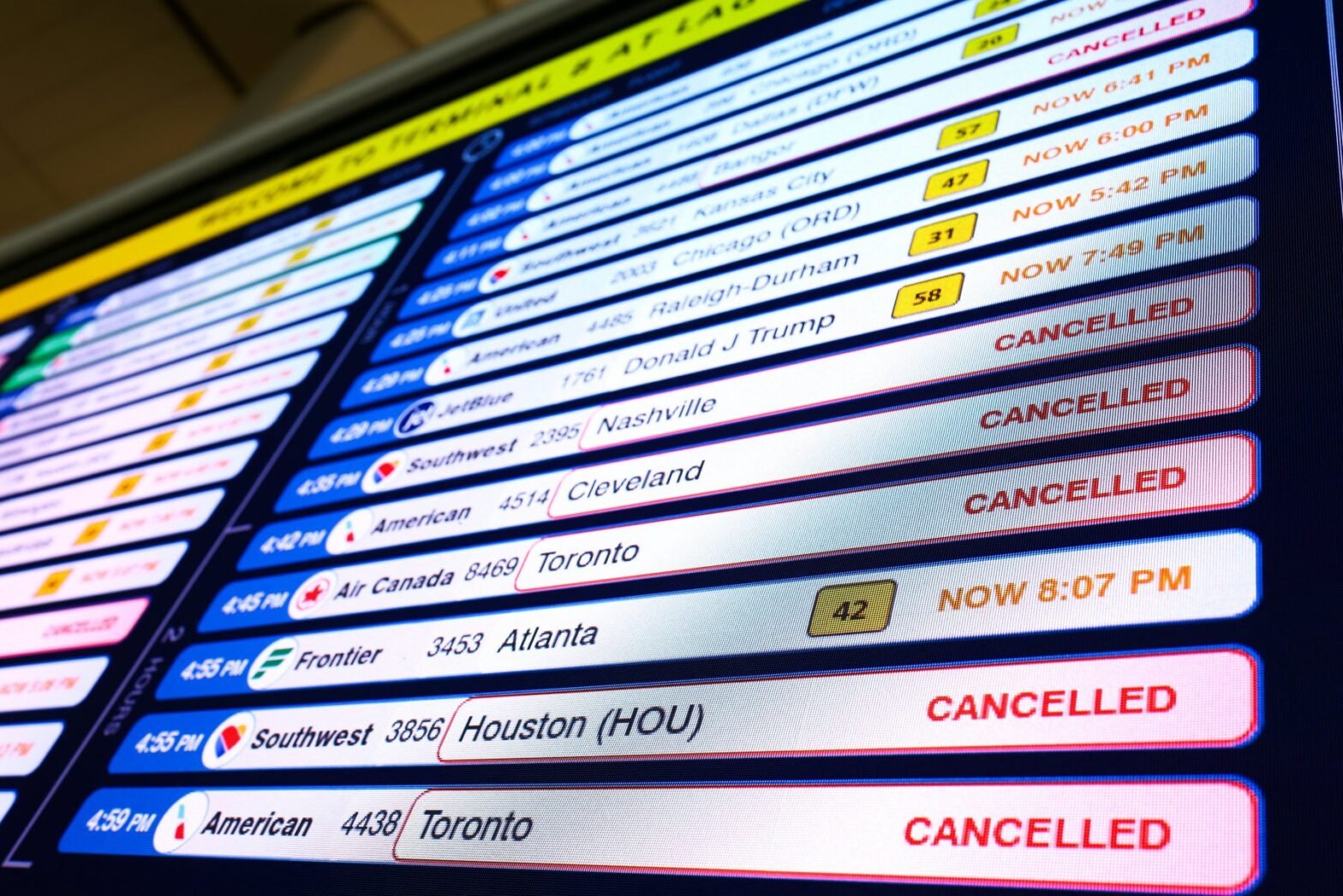
Travelers across the United States are navigating a more complicated airport environment this week as three developments converge.
The first is a growing strain on airport security as the Transportation Security Administration (TSA) staffing shortages continue during the partial government shutdown, which has left thousands of officers working without pay and contributed to longer lines at several major airports.
The second is the Trump administration’s decision to deploy Immigration and Customs Enforcement (ICE) agents to assist at more than a dozen airports as officials try to reduce bottlenecks.
The third is a major disruption in the New York region after an Air Canada Express regional jet was involved in a runway collision at LaGuardia Airport late Sunday, forcing the airport to close for part of Monday and adding pressure to an already stressed travel system.
For passengers, the result is a travel environment with less predictability at security checkpoints and more risk of delays around major hubs. Anyone flying in the next day or two should expect longer processing times, monitor official airport and airline updates closely, and build in more time than usual before departure, especially if their trip touches New York, Atlanta, Houston, or other airports facing staffing strain. These issues are unfolding simultaneously, making airport operations more difficult for travelers and staff.
Why TSA Staffing Shortages Are Creating Longer Lines

The security delays are tied directly to the shutdown and the staffing pressure that has followed. Reuters reported that TSA absences rose above one-third at some large airports, including hubs in Houston and Atlanta, while the government said the national absentee rate reached 10.2% last week. According to the news agency, more than 400 TSA officers have left since the shutdown began on February 14. Those numbers have led to long waits during a busy spring travel stretch, with Atlanta’s airport advising passengers to arrive 4 hours early on Monday due to security lines.
To ease some of that pressure, the Department of Homeland Security has started deploying ICE agents to airports, including Atlanta, JFK, LaGuardia, Newark, New Orleans, Phoenix, Cleveland, Pittsburgh, and Fort Myers. The Guardian noted that the agents are being used mainly for crowd management and support duties outside secure screening areas, as they do not have the same clearance as TSA officers for checkpoint work behind security.
Atlanta Mayor Andre Dickens said the deployment there was “not intended to conduct immigration enforcement activities,” while border czar Tom Homan told CNN, as quoted by The Guardian, that the goal was to free TSA officers from non-screening tasks so more of them could return to checkpoints. For travelers, that means the screening process may look somewhat different at some airports, but TSA remains the lead agency handling security.
What Happened At LaGuardia And Why New York Travelers Should Pay Close Attention

The separate disruption in New York is adding another layer of difficulty. Reuters shared that an Air Canada Express CRJ-900 operated by Jazz Aviation struck a fire truck while landing at LaGuardia late Sunday. Officials said fatalities were reported, including the pilot and first officer, and that dozens of other people were injured. Air traffic control audio reviewed by Reuters captured a controller saying, “Stop, stop, stop, truck one stop, truck one, stop.”
The Federal Aviation Administration (FAA) said LaGuardia was closed early Monday, and the shutdown led to hundreds of cancellations and diversions as officials began investigating the collision. The pressure spread beyond LaGuardia itself. The Associated Press reported that Newark Liberty also briefly halted arrivals and departures Monday morning after air traffic controllers evacuated the tower because of a burning smell from an elevator.
Officials said the issue was unrelated to the LaGuardia collision, but it still added strain to one of the country’s busiest air corridors, even as flights were already being diverted and rescheduled. That combination made the New York area especially difficult for travelers on Monday and could continue to affect aircraft positioning and schedules after normal operations resume.
What Travelers Should Do Right Now Before Heading To The Airport
Travelers should leave earlier than usual, check their airline’s app before leaving for the airport, and watch for gate, delay, and cancellation alerts throughout the day. The FAA’s National Airspace System status page and airport status tools can help travelers confirm whether delays, closures, or traffic management programs are in effect, especially in the New York region.
TSA also advises passengers to use the MyTSA app, which offers estimated wait times and checkpoint information, while the agency’s security screening guidance remains the clearest source for what to expect at screening. For now, airport security is still operating but is less predictable than usual. The airports facing the greatest pressure are those already managing high passenger volume, higher absenteeism, or operational disruptions from Sunday night and Monday morning.